
THE
REVIEW AND CONCLUSIONS OF THE VALUES OF PALANGA PARK
Kestutis
Labanauskas
Summary
There is a unique
combination of values in Palanga park. It was created by
French landscape architect Edouard André combining
nature and cultural values. Here mythology is connected
with science, the legends continue and supplement living
history, unique relictive pinery blends with rare flora,
chosen by experts known all over the world. Ancient
archaeological art merges with the greatest contribution
of modern artists. The most famous historical symbol is
the hill of Birute, announced as an archaeological
monument of republic matter. Values of Birute hill
inspired the later expression of creation (chapel, image
of Lourde, composition “Tau, Birute” (For you,
Birute).
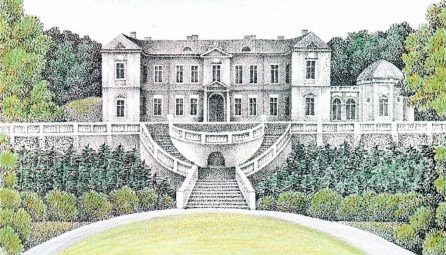
In the respect of
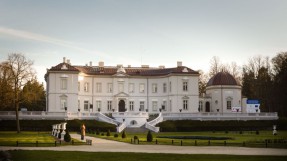
composition very suggestive place is given to a palace,
built and projected by architect F. Schwechten,
neorenaisance style in 1897. For forming their terrace
soil was taken from a nearby marshy pit establishing
picturesque ponds of the park with an island.
Looking from the ponds
palace is very notable. Raise into 4,5 metres height and
overt compositions maintains a perfect visibility from
the park.
The favourable
precondition to park's projection was the acquaintance
of F. Tiskevicius with E. André and F. Schwechten. They
were collaborating in native to Antanina Tiskeviciene
Poznane great duchy, where they have restored the palace
and park of Samostrzele. Then F. Tiskevicius invited F.
Schwechten and E. André to Palanga.
His son René André
helped his father with his projects (his article about
this work is very important). Planting lasted for
several years at the end of the 19 century receiving
help from Belgian planter Buyssens de Coulon. It's
necessary to accentuate father's and son's André
attentiveness to relictive Palanga pinery: the most
important aim was to leave the forest untouched, to keep
its wrath and majesty.
The wiseness of the
project needs to be accentuated: a marsh was drained
according to this project and a pond was established
instead of it. The soil for seedlings was improved by
peaty black earth taken from that pond.
The unique for Lithuania
dendroflora assortment was applicated in the part of
Palanga - about 500 species of trees, bushes and
convolvulus. So for serious reasons a park of Palanga is
one of the parks of landscape standards.
By his example my teacher
dendrologist L. Cibiras later grounded comprehensive
method of old green plantations research and
application.
It's a pity that an
original list of assortment used by E. André hasn't
been found yet.
Only half of its species
survived - some of the plants didn't pass the exam of
the climate, the others were ruined by vandalism and
neglection during two World wars and hard post-war
times.
The sources of research
during post-war years in Palanga park present 255
species and forms (among them 43 spontaneous, 212
introducted which include 35 new, 12 doubtful and 2
extincted).
It seams that
comprehensive explorations and the search of
dendrological sources would ground the renovation of
Lithuania's parks projected by E. André with authentic
plants.
For that reason the
collection of Palanga park dendroflora is a fund of gold
for Lithuanian dendrology.
Palanga park is unique
considering the architectural, dendrological artistic
values, also archeological and historical heritage. So
because of that it deserves an international importance
(it was created by specialists of different nations).
That's why on the occasion of centenary a conference
should send a resolution to Lithuania's Government and
ICOMOS service suggesting that Palanga park should be
included into the World's Heritage list.
Prepared by: Labanauskas K.
The review and conclusions of the values of Palanga park
// Lietuvos zeldynu ateitis /sud. Regimantas Pilkauskas. -
Vilnius: Publishing Office of Vilnius Academy of
Fine Arts,
2001. P. 38-39