
In
Short
This
landscape park is one of the prettiest, best preserved, and
best maintained parks in coastal region of Lithuania. In
1897 Count Felix Tiškevičius founded this park around the
palace built in the same year. The park was designed by the
famous French landscape architect and botanist Eduard
Fransua Andre, (1840 -1911), who spent three summers in
Palanga with his son Rene Eduard Andre (1867 - 1942)
supervising the construction of the park. The Belgian
gardener Buyssen de Coulon assisted them.
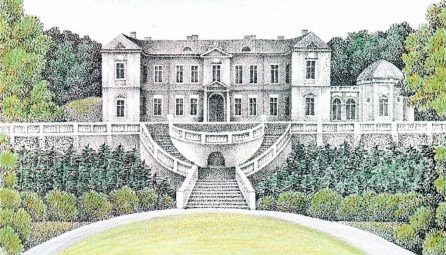
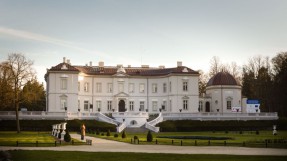
The contrast of scenery is emphasized by the palace's
regular shape: the northern side of which opens onto a
magnificent terrace with the steps leading into the park.
Flowers and a fountain add more to the effect.
The southern side of the palace is surrounded by an oval
rose garden that is connected to the palace's terraces by
stairs. Experts guess that the park's founders planted about
500 different kinds of trees and bushes. The trees were
brought to Palanga from Berlin, Königsberg and other
European botanical gardens.
Today the park covers an area of approximately 100 ha. Trees
cover 60 ha, fields 24,5 ha, flowers 0,5 ha, flowing water
1,16 ha. There are 7 sculptures and a number of other
architectural structures there. The park has watering and
decorative lighting systems.
The park is financed by the town of Palanga.
Prepared
by “Gintarinė Palanga”. (Gintarinė Palanga.
Palanga, Palanga information center. P. 12)
Properly
- This
landscaped garden is one of the prettiest,
best-preserved, and best-kept parks in Lithuania's
coastal region. In 1987 Count Felix Tiskevicius
founded this park around the palace built the same
year. The park was designed by the famous French
landscape architect and botanist Eduard Fransua Andr‚
(1840-1911), who spent three summers in Palanga with
his son Ren Eduard Andr (1867-1942) supervising the
park's construction. They were assisted by the Belgian
gardener Buyssen de Coulon.
- Andr's
talent and the natural and historical uniqueness of
the park's setting successfully blended to create a
piece of art.
- The
scenic park offers a variety of views and moods. The
palace is set between a pond and the legendary hill of
Birute - an ancient Lithuanian sacred place - that
offers a glorious view of the sea. The natural
foundation of the park, both in earlier times and now,
are relicts of ancient pine forests. Little paths and
squares with beautiful flower arrangements are laid
out skillfully among the trees.
- The
contrast of scenery is emphasized by the palace's
regular shape: the north side opens onto a magnificent
terrace and steps leading into the park. Flowers and a
fountain complete the effect. The south side of the
palace is surrounded by an oval rose garden that is
connected to the palace's terraces by stairs.
- Experts
guess that the park's founders planted about 500
different kinds of trees and bushes. Trees were
brought to Palanga from Berlin, Karaliaucius and other
European botanical gardens. Today - as before - pine
trees dominate the park. Firs and dark alders grow in
the more humid areas. About 250 imported and 370
native plant species are represented. 24 of these are
included in Lithuania's list of endangered species
(1992 data).
- The
park has survived two world wars and a number of
natural disasters. It has also been extended and
restored. However, with the exception of a few
details, the park has kept the atmosphere created by
Andr, as Florence Andr Kappelin, the head of the E.
Andr association, confirmed during her visit to
Palanga in 1996.
- Today
the park covers an area of approximately 100 ha. Trees
cover 60 ha, fields - 24.5 ha, flowers - 0.5 ha,
flowing water - 1.16 ha. Beach and sand dunes stretch
for 1.5 km. Paved and unpaved paths cover 18 km. There
are 8 different buildings, 7 sculptures and a number
of other architectural structures. The park has
plumbing and a decorative lighting system.
- The
park is financed by the city of Palanga. The
"Palanga Botanical Park" institution
maintains the park and organizes events.