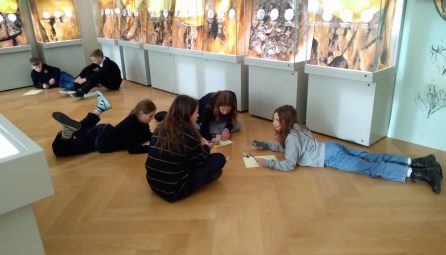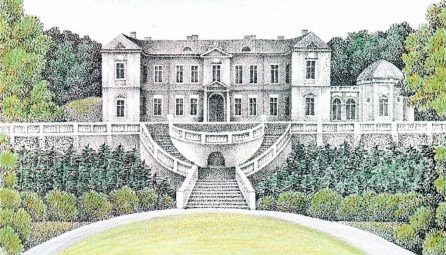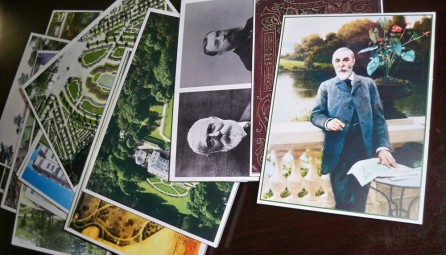

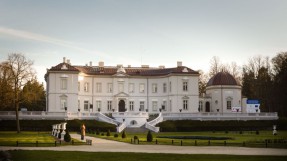
- The Amber Museum is housed
in the neo-renaissance palace built by Count Felix
Tiskevicius in 1897. The palace was designed by the German
architect Franz Schwechten and was restored in 1957
according to plans by the architect Alfredas Brusokas. The
Amber Museum was opened August 3, 1963 as a branch of the
Lithuanian Museum of Fine Arts. Currently the museum
includes 15 rooms with expositions that cover about 750
sq.m. The collection includes about 28 000 items. The
palace is connected to a chapel that houses moving
exhibitions.
-
- Built in 1869 by the
architect K. Majeris, the construction of this chapel was
promoted by the Palanga parish priest K. Steponavicius.
The current chapel replaced a cross and a wooden chapel in
the honor of St. Jurgis. In even earlier pagan times our
ancestors used the hill as an observatory. Since 1976
stained-glass windows, designed by the artist Liudas
Pocius, decorate the chapel. The Lurdas lies at the foot
of the hill.
-
- The second floor of the
administrative building houses the orangery. During high
season flower and art exhibits (mostly ceramics) take
place here. This building is located in the park's nursery
area, in the south-east of the park next to the small
terrace.
-
- The rotunda (a band stage)
was built in 1927. In Count Tiskevicius' times, orchestras
from Palanga and elsewhere played here almost every night,
attracting many guests. After the Second World War,
attempts were made to revive this tradition, but the
rotunda never achieved its earlier popularity and
gradually fell into disuse. The rotunda was rebuilt in
1997.
-
- After the construction of
the park was finished, Count Tiskevicius' wife Antanina
decided to build the Lurdas. All the stones used are
unprocessed and are held together by cement. A statue of
the Virgin Mary used to stand in a niche of the Lurdas.
During the revival of the Lithuanian nation, Vilius
Orvydas donated a stone sculpture of the Virgin Mary that
stands in the Lurdas to this day.
-
- The park information center,
a souvenir shop, and a flower shop selling plants raised
in the Palanga nurseries are all located in this building.
This guardhouse was built in Count Tiskevicius' time next
to the main entrance to the park (there are 12 entrances
in all).
-
- This sculpture was created
by the artist Konstancija Petrikaite-Tiuliene and erected
in 1965. It stands on a stone at the foot of Birute's hill
- the symbolic eternal resting place of Princess Birute.
The sculpture bears the inscription "For you,
Birute."
-
- "Rebeka"
("Woman Carrying Water"), by the French sculptor
Hubert Louis-Noel, originally stood in the Vilkenas palace
park (Silute region). The sculpture found its new home
around 1983 and was restored by the Pranas Gudynas
restoration and conservation center. A copy still stands
in the Vilkenas park where the original used to be.
-
- This terrace was originally
Count Tiskevicius' garden: the south side was enclosed by
glass and the north by a wall. The garden also used to be
fenced it. The terrace's appearance has changed many
times. Two old pedestals of sculptures remain as well as
remnants of an old fountain. Since no photographs of the
original garden have been found, it is difficult to
recreate the terrace in its original form.
-
- This monument, designed by
the sculptor Steponas Sarapovas and the architect Algis
Knyva, is in the north of the park, to the right of the
main park entrance near Dariaus and Gireno street. The
sculpture stands on the Jaunimo hill. This spot is an
ancient Baltic burial mound where Jewish people were later
buried.
-
- This is one of the most
popular sights of the park and one of the prettiest and
best-known sculptures in Lithuania. Egle stands near the
main entrance and was created by the sculptor Robertas
Antinis (the older) and the architect Alfredas Palauskas.
-
- This sculpture by Stasys
Zirgulis stands across from the Tiskevicius palace, on the
botanical garden's large terrace . It is a reproduction of
an earlier statue that was probably brought to the park
from Paris at the turn of the century. The original was
destroyed after World War II by the Soviet rulers. The new
statue was designed according to old photographs and was
blessed by the bishop of Telsiai, Antanas Vaicius, on June
14, 1993.
-
- This memorial is located in
the newer, southeast half of the park, near a path that
follows the dunes in the direction of Klaipeda. You will
find the following inscription in Hebrew and Lithuanian on
a large stone of pink granite: "Here in the dunes of
the southern part of this forest Nazi executioners and
their local helpers brutally murdered 105 Jews in 1941.
May this be a holy memorial to the innocent victims."
This memorial was erected around 1989 at the sight of mass
executions.
-
- This wooden statue by the
local sculptor Julius Vertulis was erected in 1974. It is
located next to Meiles aleja not far from
"Vaidilutes" caf and Birute's hill.
-
- This oak was planted in
honor of Antanas Smetona, president of Lithuania
(1926-1939) and leader of the Tautininkai Party, known to
many as the People's Leader.
- In 1934 the Palanga branch
of the Tautininkai planted an oak tree at the foot of
Birute's hill in honor of Antanas Smetona. When the tree
was planted, the organizers, including the mayor of
Palanga, Jonas Sliupas, placed a letter addressed to
future generations under the roots of the tree. The
capsule with the letter has not been uprooted to this day
and the oak of the People's Leader adds to the beauty of
the park. Not far from this oak, the leaders of the Baltic
states planted a birch tree in honor of Baltic friendship
in 1936, but this tree no longer exists.
-
Photos by
Danute Mukiene, Juozas Baltiejus, Kazimieras Urbonavicius