
- PALANGA,
the largest and most famous Lithuanian seaside resort
on the Baltic shore, 25 km north of Klaipeda. Prior to
World War I, Palanga used to attract 4,000-5,000
guests per season; during Lithuania's independence
their number rose to a maximum of 15,000; after World
War II, the total of vacationers jumped to 100,000,
but most of them now come from Soviet Russia. The
regular Inhabitants of the town numbered 2,039 in
1923, 4,600 in 1939, 5,685 in 1959, and 10,800 in
1972. The town occupies a territory of 2,970 ha,
divided into two parts by the Raze creek (17 km). The
summer villas, sanatoria, and a large park are located
in the southern section, while most of the town's
offices and plants are situated in the northern
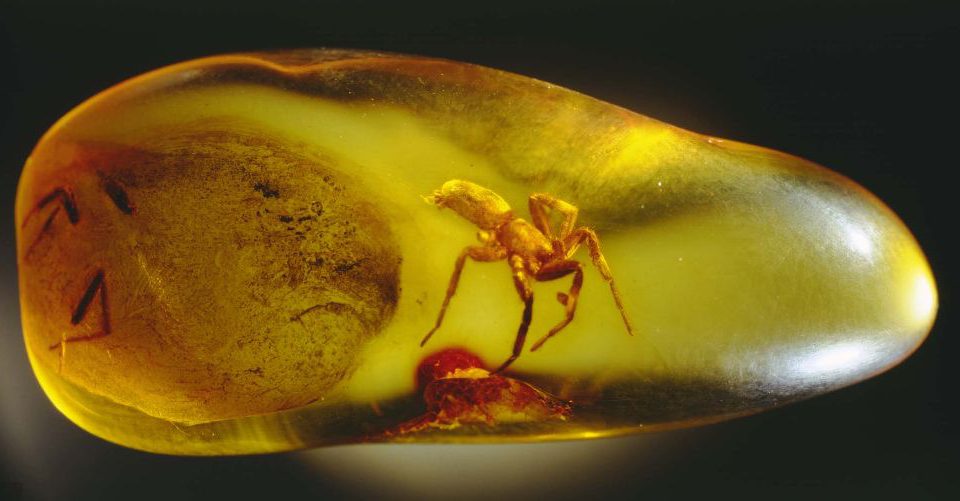
section. The main enterprise is the amber works, which
employs about 100 workers and consumes 8,000 kg of
amber annually for art items and other products. At
the end of the 19th century some 500 workers used to
process approximately 20,000 kg of amber annually.
- Palanga has become a
well-known seaside resort because of several
significant advantages. The broad and spacious bar of
clean sand with a long chain of undulating dunes is
ideal for sunbathing. The temperature is higher than
the annual average in Lithuania, the clouds are fewer,
and the sun's radiation is greater. The amounts of
ozone and iodine, in the air are relatively high.
Mineral water for drinking and for curative baths is
obtained from an artesian well. The town is surrounded
by pine-forests and stands between two hills
associated with many legends. According to one of
them, Birute, the wife of Prince Kestutis, was a
priestess who guarded the sacred fire burning on an
altar at Palanga. It is said that after the death of
Kestutis (1382) she returned to her native place and
was buried on the hill that was consequently named
after her. The legend has become very popular among
Lithuanians and lends a distinct romantic aura to
Palanga.
- The first steps in
developing Palanga as a resort were taken by the
counts Tyszkiewicz (Tiskevicius), when one branch of
their family acquired the Palanga estate in 1824 and
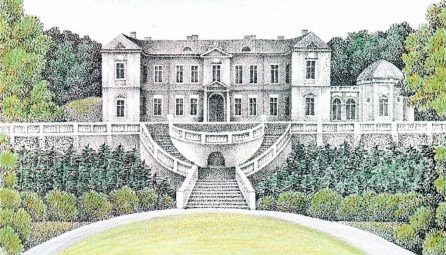
transformed it into their residence. The creation of
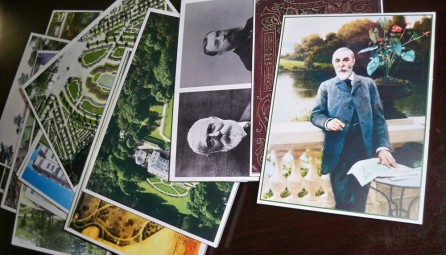
the park (70 ha), according to a design of the French
architect Andre, took about one half of a century.
More than 150 kinds of trees and shrubs were planted.
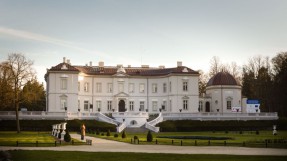
A two-story Renaissance palace and a chapel were built
in the park in 1897. A large statue of Christ with
open arms, created by the famous Danish sculptor
Thorvaldsen, was erected in front of the palace.
Eventually the park became one of the most beautiful
in Lithuania. A replica of the Lourdes grotto was
built on the slope of the Birute hill. Part of the
estate's land was laid out as a resort area; a spa
hotel and several villas were built, electric power
was supplied, an artesian well (229 m deep) was
drilled, plans for water supply and sewerage were
completed. All this activity was interrupted by World
War I and the German occupation. After the war, the
development of the resort was taken over by the
Lithuanian government, which granted Palanga the
rights of municipality. Dr. Jonas Sliupas, who was
appointed the first mayor, made a considerable
contribution to the growth of the resort. Palanga
became a summer vacation site for the President of the
Republic, many high officials, writers, artists, and
people engaged in public affairs. During the season
the schedule of events was filled with congresses,
youth conventions, sports festivals, and concerts.
After World War II the resort was expanded by
incorporating four nearby villages; the northern
limits of the town now reach the Sventoji river. The
old streets and public squares have been enlarged and
newly planted, new streets were laid out, many new
houses and several larger villas were built, the
artesian well was deepened to 599 m . An airport for a
connection with Vilnius was built. The park was
transformed into a botanical garden, while the palace
was given over to the Artists' Association and now
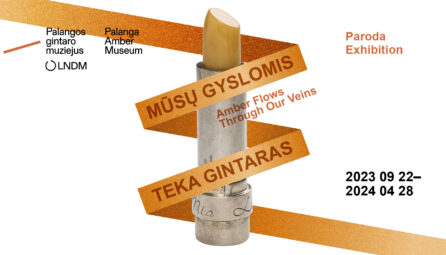
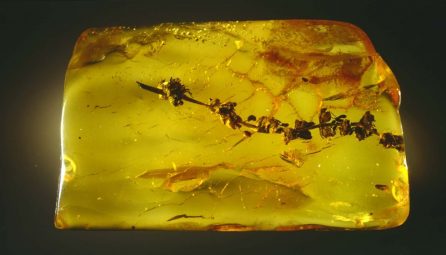
houses an amber museum. Danish and Swedish raids along
the eastern Baltic shore is contained in 9th-llth
century sources (see Apuole). Palanga is mentioned for
the first time in an agreement (1253) between the
Bishop of Courland and the Teutonic Order of Livonia
to partition certain territories adjacent to the
Baltic coastline. Although all these regions were
sparsely inhabited in the 13th century, the Baltic
shore near Palanga became an important wedge,
separating Prussia from Livonia and preventing the
merger of the two branches of the Teutonic Order
entrenched in the two lands. The German knights tried
both war and negotiations to seize the Palanga
seashore, for them a vital link in communication by
land, but failed. Palanga remained under Lithuanian
rule henceforward, except for several years at the
beginning of the 15th century, when Vytautas the Great
temporarily consigned western Lithuania (Samogitia) to
the Teutonic Order for diplomatic reasons. A royal
estate was established in Palanga, and in 1511 its
administration was entrusted to the Kesgalla family of
magnates, the elders of Samogitia. The estate and the
township of the same name were later administered by
other Lithuanian noblemen. Following Lithuania's
annexation by Russia (1795), the estate was given to
General Zubov, from whom it was taken over in 1801 by
General Nesolovsky. In 1824 the estate was acquired by
Count Michael Tyszklewicz, whose relatives remained in
Palanga until the first Soviet occupation in 1940.
- In the 16th century
Palanga became an important Lithuanian harbor, used by
Dutch, Swedish and English vessels. King Sigismund
Vasa in 1589 granted an English trade company a permit
to enlarge the harbor. In 1679, King John Sobieski
allowed the establishment of an English trade
representation, with the condition that a second port
be built at the mouth of the Sventoji river. Although
neither port had a closed bay or a good river mouth,
they played a significant role in Lithuania's economic
life. During the 16th-17th centuries trade was
conducted with Konigsberg, Danzig, Liepaja, Riga, and
other Baltic ports. The list of imports was headed by
manufactures, haberdashery, salt, iron, arms, and the
so-called colonial goods; exports consisted mainly of
timber, flaxseed, honey, hides, cattle. The Lithuanian
ports competed with Liepaja and Riga, through which
large quantities of flax and grain were exported from
Lithuania. At the request of Riga's merchants, the
Swedes destroyed both Lithuanian ports in 1701, at the
time of the Great Northern War. Some one-and-a-half
centuries later, the Tyszkiewicz family made an
attempt to revive the Palanga harbor. They built an
oak bridge into the sea for the mooring of ships and
acquired a small boat of their own that sailed the
Palanga-Liepaja route. The port was gradually covered
with sand, and since 1892 the bridge has been serving
as a promenade area for vacationers.
- In 1819 Palanga was
taken out of the county of Telsiai and assigned to the
province of Courland. Situated at the very
Russian-German border, the town made its living from
the border trade, especially during the winter months
when transport by sea became impeded, and from the
amber industry. When the Russian administration
forbade the printing of Lithuanian books and
newspapers in Latin characters (1864), Palanga became
an important point for the smuggling of Lithuanian
publications from Lithuania Minor. Rev. Marcijonas
Jurgaitis (in 1883-89) and physician Liudas Vaineikis
(in 1896-1900) played the leading roles in this action
of cultural contraband. They organized an extensive
network of smuggling and dissemination of the
clandestine press. Vaineikis and about 25 other
persons were punished by deportation to Siberia in
1901. A public Lithuanian gathering in 1899 featured
the comedy Amerika pirtyje (America in the Bath);
while in other parts of Lithuania such theatrical
events were forbidden, there was a little more
cultural freedom in Courland. Many well-known
Lithuanian public figures attended the Palanga
secondary school, established in 1886. During the
early days of independent Lithuania, the Latvians had
occupied Palanga as a township belonging to the
province of Courland. In 1921, after a boundary
between the two Baltic states was negotiated, Palanga
was attached to Lithuania.
-
- Bibl.:
J. Basanavicius, Is Palangos istorijos, Vilnius,
1922.
- I. Koncius and V.
Ruokis, Palangos krastas, Kaunas, 1925.
- L. Kauleikis, •Palanga,
Vilnius. 1957.